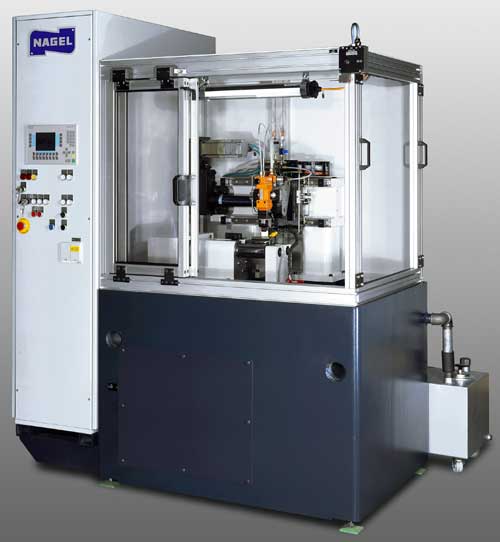
 Sanjai Keshavan, manager of Nagel Precision’s Eco Hone division, shows a finishing machine being built for an auto supplier in Romania. Nagel is planning to export Eco Hone machines and add jobs at its high-tech manufacturing plant in Ann Arbor.
Machine firm says diversity is way to grow
By KATHERINE YUNG
FREE PRESS BUSINESS WRITER

Michigan’s manufacturing ingenuity is still very much alive at Nagel Precision.
Since 1982, the U.S. subsidiary of Germany’s Nagel Group has been building high-volume honing machines for automakers and their suppliers at its factory in Ann Arbor, shipping many orders to customers in Europe and Asia.
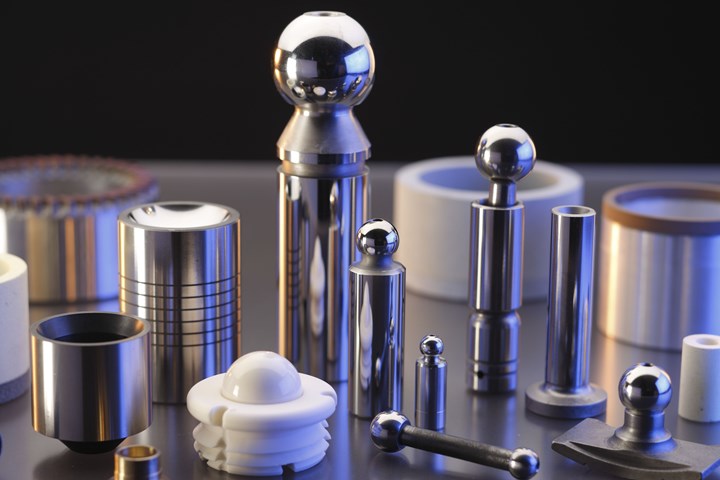
Honing machines are giant, million-dollar-plus, custom-designed pieces of equipment that improve the shape and the surface finish of gears, connecting rods and other parts that go into engines and transmissions.
This kind of work is usually the last step in the manufacturing process and is critical for the long-term durability and performance of these parts. Though consumers don’t see the results of honing, their cars and trucks wouldn’t last long without it.
Despite being a dominant player in this market, Nagel knew it needed to diversify, a goal that became more urgent as auto sales took a dive in recent years. So today, the company has begun selling a line of less-expensive, smaller honing machines called the Eco Series. They are geared toward low- and medium-volume production for small auto suppliers, auto racing teams and companies in expanding, non-automotive industries such as aerospace, medical devices and industrial equipment.
“We want to capture that growth,” said Sanjai Keshavan, manager of Nagel Precision’s new Eco Hone division. “If you’re not diversifying, it’s suicide.”
Nagel engineers in Ann Arbor and Nuertingen, Germany, created the Eco machines, a process that took two years.
Before the Eco Series, large automated honing machines like the ones that Nagel sells were too expensive for most low-volume manufacturers. So these companies usually used less-sophisticated machines that require a lot of manual adjustments.
Nagel Precision expects that sales of the Eco machines will lead to new jobs at its 140,000-square-foot Ann Arbor plant, where Nagel currently employs 140 people. The company aims to ship many of the machines to China and other foreign countries.
Though honing machines have been around for decades, they have become increasingly complex pieces of equipment, thanks to the use of sensors and other electronics. It takes workers at Nagel at least 20 weeks to design and build a single honing machine.